Purpose before cutting
The estimate identifies whether the objective is clearance, deadwood, structure, storm repair, or appearance.
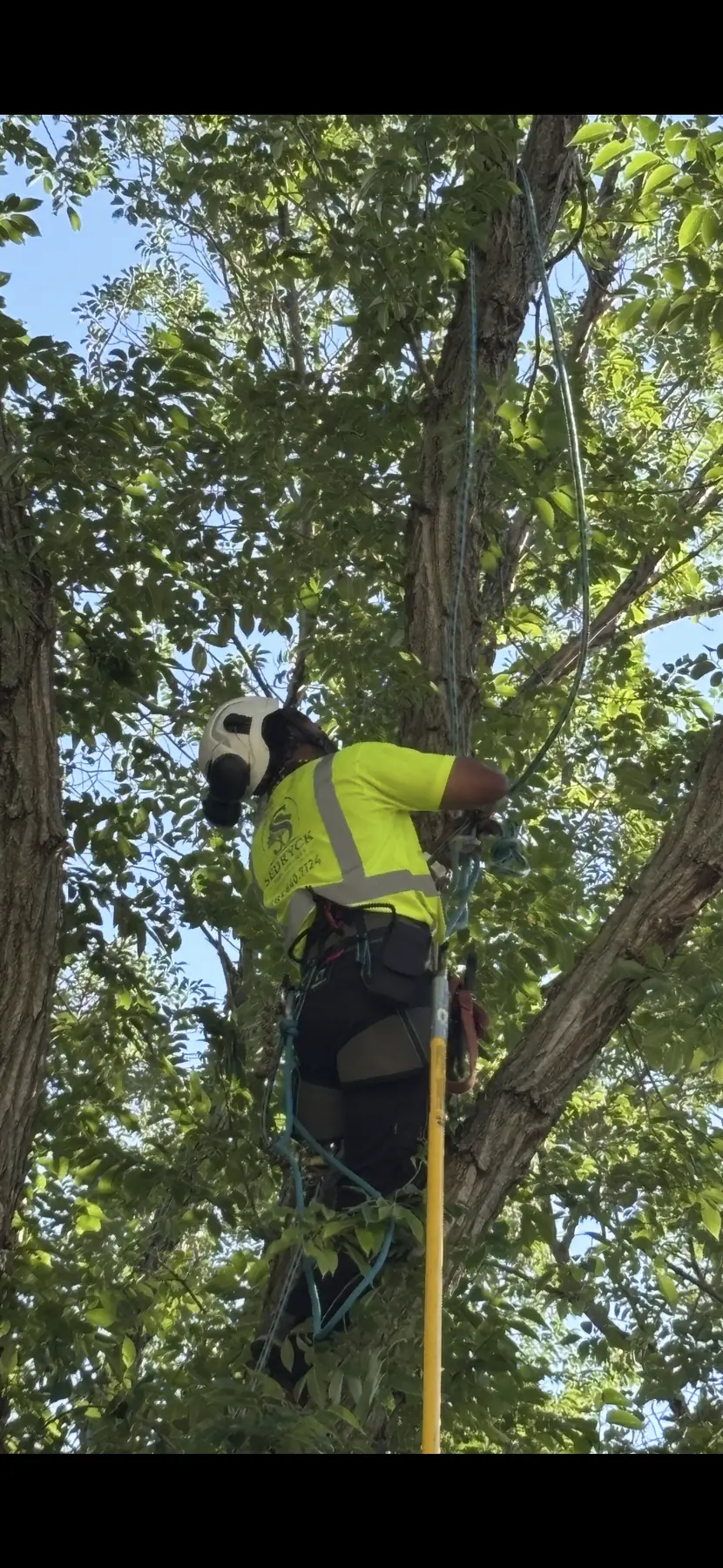
Good pruning removes the right branch for the right reason. The goal may be clearance, deadwood reduction, storm cleanup, or better structure—not simply making a tree smaller.
Tree trimming and pruning are selective branch-removal services. Sedryck Tree Services can address dead, broken, rubbing, low, or overextended limbs; create practical clearance; and clean up growth that conflicts with roofs, drives, walkways, fences, or other property features. The amount and location of live growth removed should match the tree and objective.
Pruning can solve blocked access, branches touching structures, deadwood over use areas, broken limbs, poor clearance, and crowded branch structure. It can also reduce some predictable branch conflicts before wind or ice turns them into an urgent cleanup, although no pruning can make a tree storm-proof.
The estimate identifies whether the objective is clearance, deadwood, structure, storm repair, or appearance.
Selective cuts preserve natural shape better than topping or indiscriminate reduction.
Rigging can keep removed branches from free-falling onto roofs, fences, gardens, and driveways.
Every property is different. Your estimate should identify the exact tree or area, access, method, equipment, debris handling, stump work, exclusions, and finished condition.
Discuss My ProjectSedryck uses calls, texts, photos, and FaceTime when helpful, then confirms whether an on-site review is needed before the work is scheduled.
You and Sedryck identify the branches or conflicts that matter and discuss how much work the tree can reasonably support.
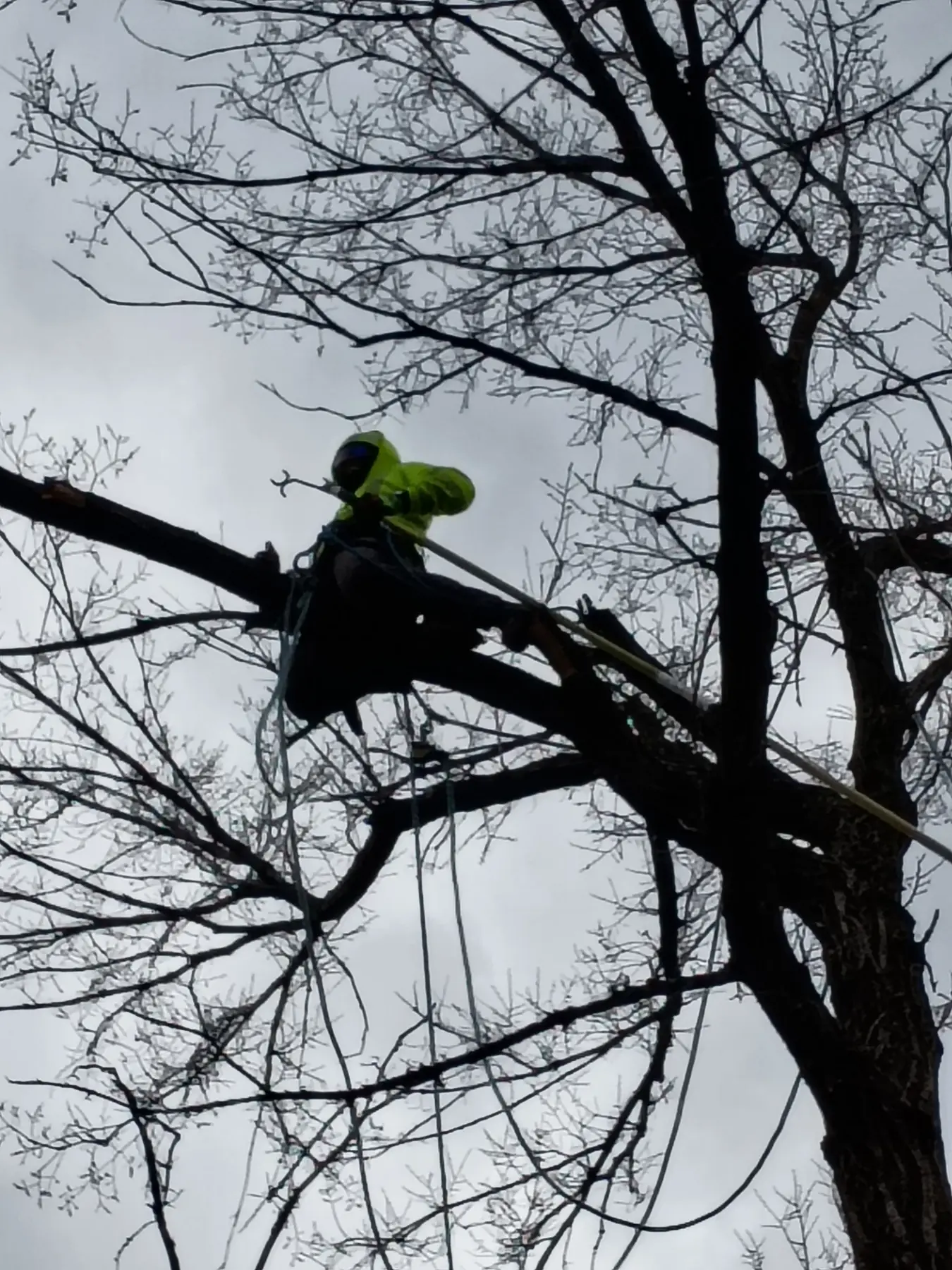
Climbing, lift, pole tools, and rigging are selected around the tree, ground, and targets.
Cuts are completed in sequence, the canopy is reviewed from the ground, and debris is handled as scoped.
Deadwood above yards and drives · Branches near roofs and structures · Storm-damaged canopies · Routine mature-tree maintenance
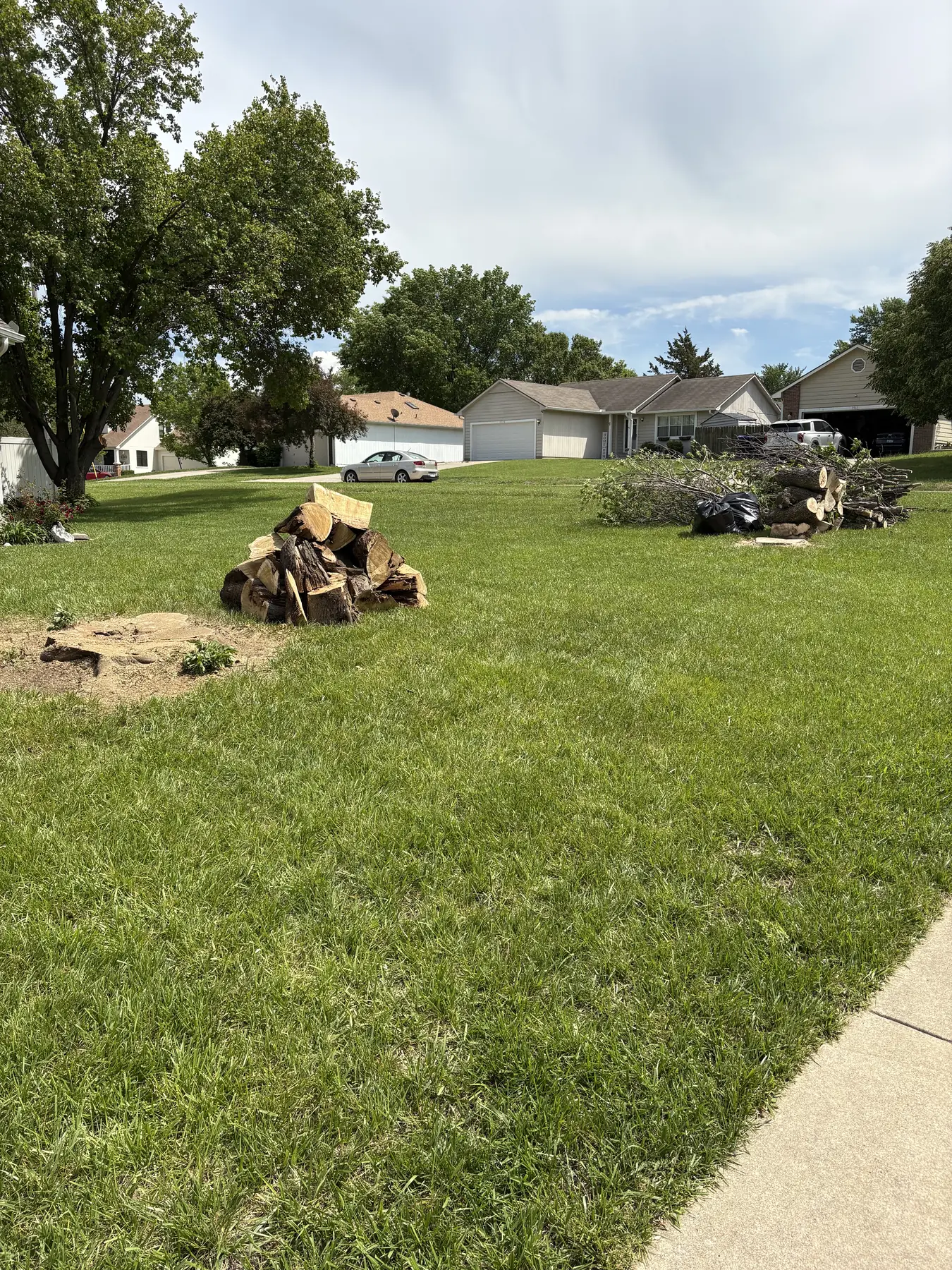
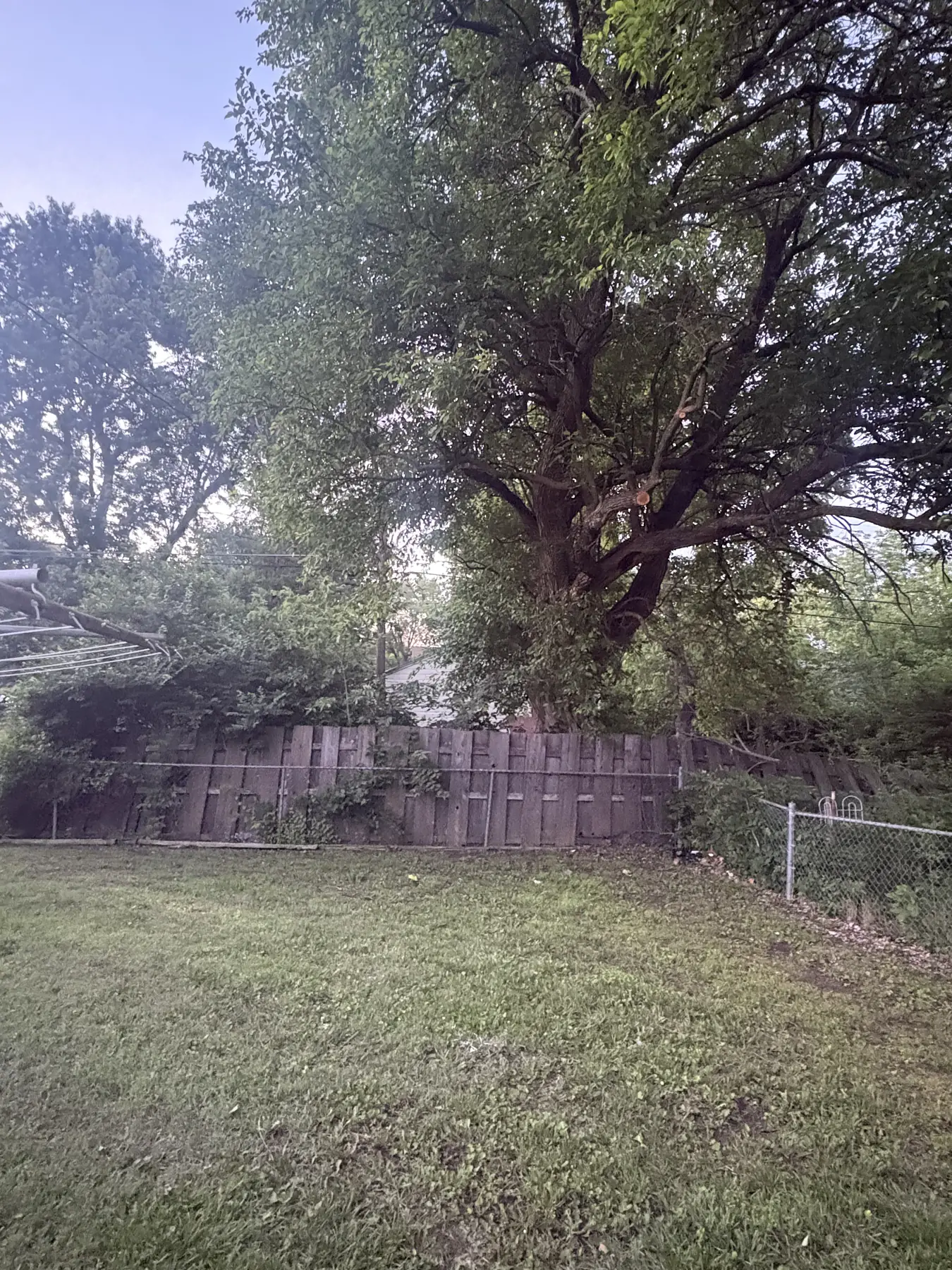
Ask what your property needs →These business-supplied photos show relevant tools, access, conditions, or work stages. Captions do not invent customer locations or project outcomes.
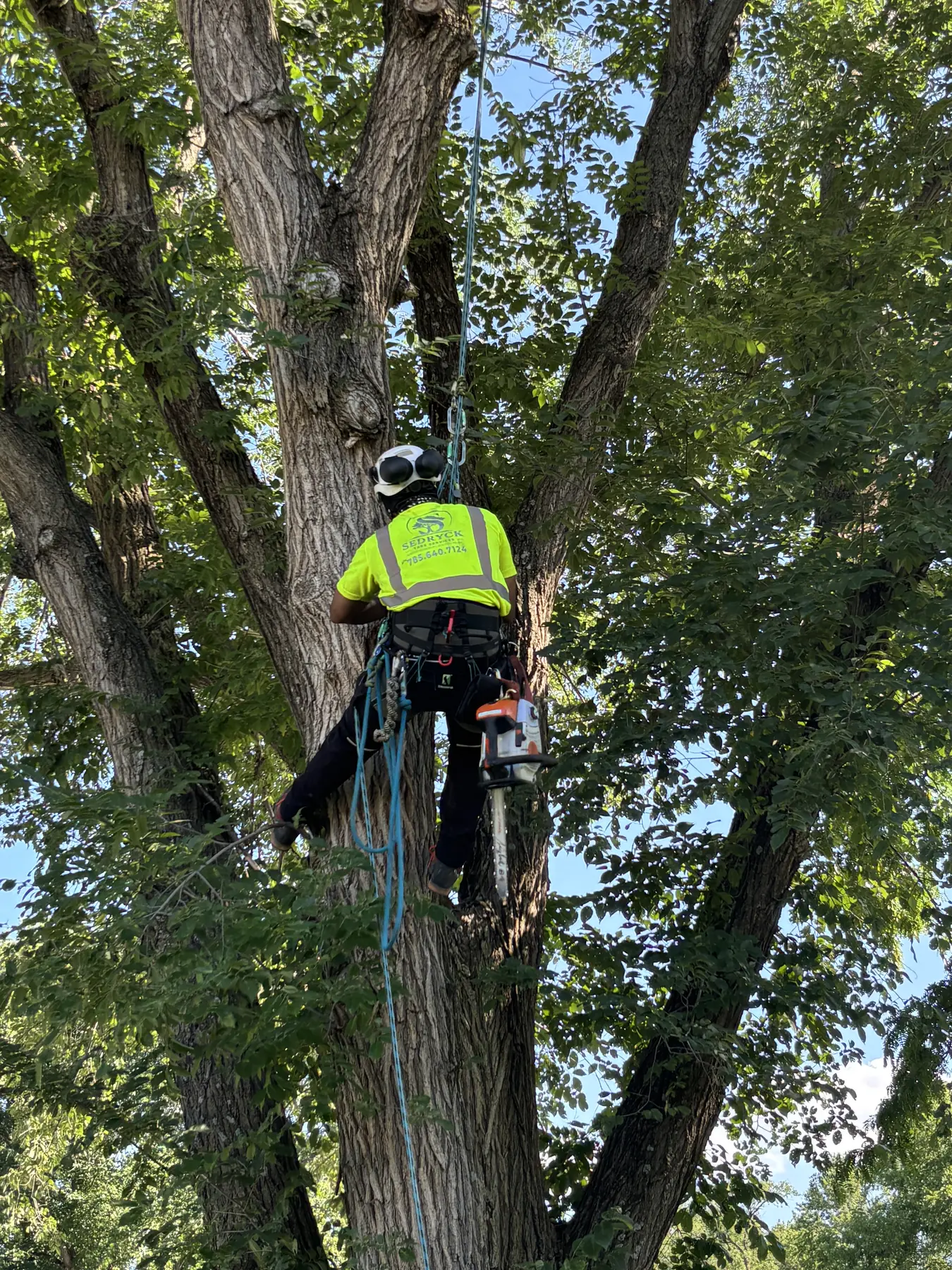
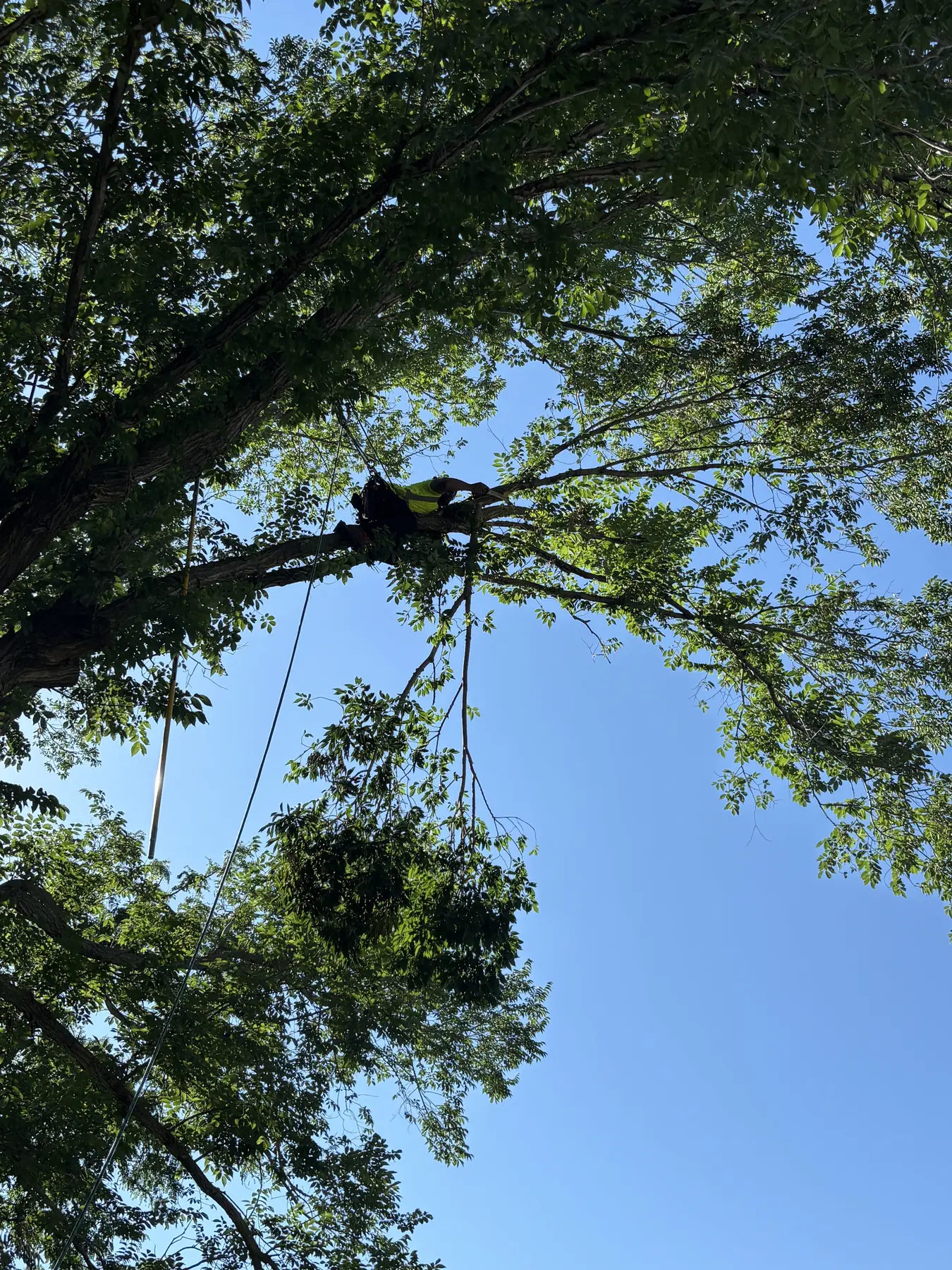
Kansas weather can change a canopy quickly. Wind, heavy rain, ice, and rapid seasonal growth make it useful to inspect mature trees for hanging branches and prior breakage. Cuts should stay outside the branch collar, and topping or random stub cuts are not part of responsible pruning.
Serving Topeka and the listed Kansas communities. Regional availability is confirmed by address, urgency, equipment needs, and project scope.
Clear scope matters more than a generic promise. Ask about the tree, access, equipment, debris, stump, timeline, and next use of the area.
People often use the terms interchangeably. In practice, the important question is why each branch is being removed—such as deadwood, clearance, damage, or structure—and how the cut affects the remaining tree.
Topping leaves large stubs and can trigger weakly attached regrowth. Sedryck's approach is to discuss selective pruning, reduction to suitable laterals, or removal when the tree cannot meet the objective responsibly.
Timing depends on species, condition, objective, weather, and whether the work is urgent. Dead or hazardous broken branches may need prompt attention; non-urgent pruning can be scheduled around the tree and season.
Do not approach or touch a tree that contacts an electrical line. Work near energized conductors may require the utility or a properly qualified line-clearance provider; Sedryck will first help identify the right next step.
Call, text, send photos, or use the quote form. Sedryck will confirm the next useful step and whether an on-site review is needed.